この記事は銀緑茶具を始めるまでのストーリーの1話目です。個人の話がメインとなりますがご容赦ください。
Ⅰ In Search of New Adventures
銀緑茶具を始める前に9年やっていたプロジェクトがある。ミューゼオ*1というコレクターが博物館をウェブ上に作れるサイト、利用者の方が登録してくれた登録コレクション数も約100万までいったがコロナの余波も受け継続性を担保する収益モデルが作れず自分のターンはある日終わった。
When I inherited Museo and paused to reflect, what remained was simple: "Focus on what you're good at" and "Ensure money circulates properly." These are obvious principles, yet if you can master them, most things work out. And then there's the importance of persistence. If you can find the point where your passion endures and your business endures overlap, you'll surely create something interesting. What makes money quickly doesn't last; it's the drill that keeps turning slowly, steadily, and continuously. *2 .
What I lost was most of the money I'd earned up to that point, and a bit of pride. But strangely, rather than feeling the urge to get it back, I was more strongly drawn to the desire to seek out new journeys and adventures. Where could I find a field to become engrossed in exploring again?
Among my ancestors was Nōtomi Katsujirō *3 , an educator and craftsman. During the Meiji period, he participated in the Philadelphia Exposition *4 and established craft schools *5 . While the era's backdrop included promoting industry for foreign currency acquisition, his emphasis on craft as culture was distinctive. I sometimes feel my current activities lie along the extension of that very philosophy.
II. Why Tea Utensils?
僕はコレクター気質が強くいろいろなものを集めてきた。革靴は400足くらいはあるし、スターウォーズのミニフィグ*6もたくさんある。でもそれらは、市場価値とかではなく興味と探索の軌跡として積み重ねられてきた。いわゆる価値のあるものを集めるのではなく、欲しいと思ったものを素直に集めてきた。茶道具もその一つで中国茶の茶壺*7(急須)だけでも30くらいはある。その中で、いまの自分のティーライフにもっと楽しめる道具を作りたいと思ったことが、銀緑茶具の出発点となった。
Museo Factory, a subproject of Museo *8 The only successful product from Museo Factory was the Grip Stone Dharma *9 . That's where I sensed the space for exploration. The field of tea utensils holds Japan's strengths in tea and craft design, offering the potential to aim for the world, even on a small scale.
Business and past interests lie along this same path. The romance lies in connecting with the world.
Engaging with artisans worldwide with respect, creating new things together. Finding small joys in gradually understanding the world through this process.
The importance of focus learned at Museo is embodied in the clear narrowing down of both field and model.
III. Designing Names and Ideologies
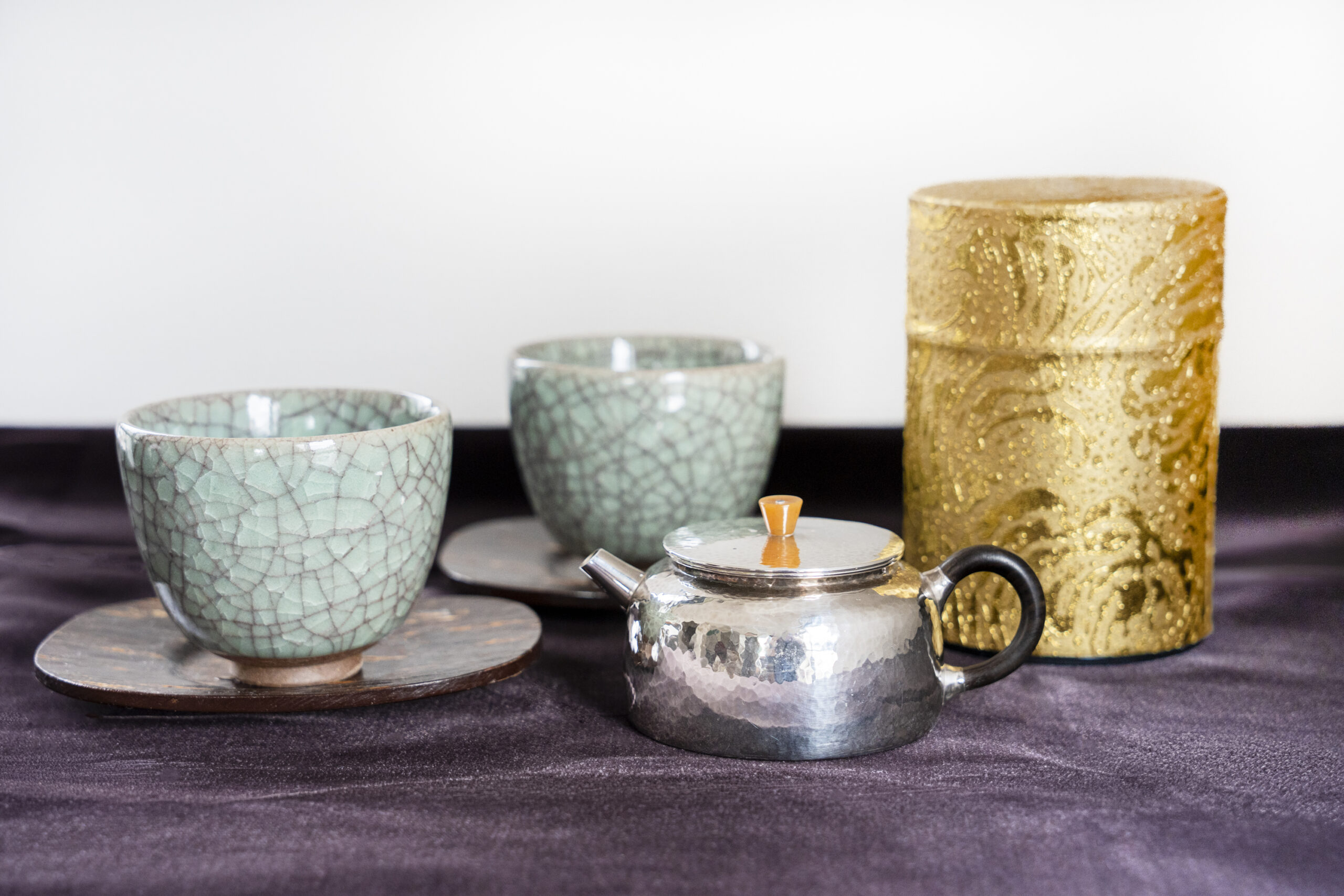
コロナ明けの再出発期、いろいろな感性を取り戻すために音楽ライブに足を運んだ。新しいバンドに日本語名*10のものが多いことに小さな感銘を受けた。自分たちも世界へ小さく船出するなら日本語で行くのも良いと思った。銀緑茶具の運営会社名「ノイエルガルテン」はドイツ語の「新しい庭という意味」。庭をモチーフにしており緑がテーマカラー。また銀は昔から惹かれてきた素材だった。お守りのような意味合いを感じることもある。それらが自然に重なり「銀緑茶具」という名になった。
Silver is mineral and hard, green is plant-based and soft. This dual contrast symbolizes not only materials but also existence itself. Minerals versus plants and animals, change versus stillness, strength versus gentleness, time versus life. The name "Silver Green" embodies the equilibrium of these polarities. Furthermore, crafting with natural materials represented by green and silver connects to nurturing creation, which I believe is the fundamental concept of coexisting with the environment.Furthermore, silver embodies the act of polishing, while green represents deepening. These two aspirations are also among the sentiments embedded within the name.
IV. The Era and New Concepts
The brand concept is rooted in the phrase "Preserve & Evolve."
Human beings are constantly changing, and that change involves destruction.
Nevertheless, I believe it is possible to change while cherishing history and connections.
The rise of social media has not only shrunk the world but also expanded the spaces where individuals can connect and express themselves. While it has many issues, focusing on its positive aspects reveals its power to "connect." What draws me in isn't fleeting connections, but enduring, cyclical bonds. Connecting with people worldwide through shared curiosities like tea or crafts, and taking time to nurture something new. I find romance in such teams expanding across countries and cultures.
This concept is "DAO-like" *11 ." Autonomous individuals bring mutual respect and consideration for each other's backgrounds to create new value. It seeks a new form of society built not on destruction or "democratization," but on resonance and continuity.
V. Beautiful Symbiosis
Humans change and sometimes destroy as they advance. Yet if we can remain conscious of other beings and hold onto the sense of "cherishing" them, we should be able to coexist for a long time. Beyond systems like recycling and conservation, this sensibility of "cherishing" is something I want to continue protecting.
銀緑茶具の初期製品はすべて工芸家との共創によって生まれる。工芸とお茶は、いまの日本に残された数少ない競争力の一つだと思う。それは単なる経済活動ではなく、文化理解の手段でもある。
銀緑茶具は、その延長にある小さな実践であり、
Quietly seeking a form of coexistence that respects the past while nurturing the future.
Notes
*1 Museo: A collection management and sharing platform launched in 2013. A web service enabling individuals to publish and share their collections as digital museums. https://muuseo.com
*2 Drill: Here, a metaphor for a tool that continuously rotates while advancing. It expresses sustained and steady growth. The motif comes from the passionate robot anime Gurren Lagann. The work centers on the themes of the spiral structure of DNA and drills.
*3 Nakatomi Katsujirō (1844–1918): An educator and craftsman of the Meiji period. Born in Saga Prefecture. He was involved in exhibiting Japanese crafts at international expositions such as the Philadelphia Exposition, and established craft schools throughout Japan.
*4 Philadelphia Exposition: The Philadelphia International Exposition (1876) was the first full-scale international exposition held in the United States, commemorating the 100th anniversary of the nation's founding in Philadelphia, Pennsylvania.Thirty-seven countries participated, showcasing the latest industrial technologies, arts and crafts, and agricultural products. Japan made its first full-scale national participation with a joint government-private sector exhibit, which the Meiji government positioned as an excellent opportunity to present the image of "Enlightened Japan." Through this exposition, Western design concepts significantly influenced Japanese crafts, design, and educational systems.
*5 Craft Schools: Vocational technical education institutions established during the Meiji period. Nakatomi Katsujiro was involved in founding schools such as the Ishikawa Prefectural Technical School (precursor to the present Kanazawa College of Art and Design), the Toyama Prefectural Craft School, and the Fukui Prefectural Craft School. These institutions aimed to fuse Western technology with traditional Japanese craftsmanship in their educational programs.
*6 Minifigure: LEGO block figures. Popular as collector's items, such as limited editions from the Star Wars series.
*7 Teapot: A small teapot used for Chinese tea. Those made from Yixing clay, known as purple clay (shisha), are particularly prized.
*8 Museo Factory: A limited-edition goods production and sales venture for collectors, operated as a subproject of Museo. Characterized by original product development through collaboration with artisans.
*9 握り石ダーマ:ミューゼオファクトリーが開発したハンドグリップ。925シルバーを使用し、手に馴染む形を一つずつ鍛造で作った。職人による一点物の手作り製品として人気を博し、テレビ番組で特集されるなどした。現在も販売中。
*10 Japanese names: Official Hige Dandism, Hitsuji Bungaku, Ryokushoku Shakai, etc. This refers to the trend where many Japanese bands gaining attention since the late 2010s have adopted Japanese names.
*11 DAO-like: An organizational form that operates autonomously without a central administrator, inspired by the concept of a Decentralized Autonomous Organization (DAO).